AFM-Telethon, Drew Weissman and James Dowling join forces to develop the next generation of gene therapies
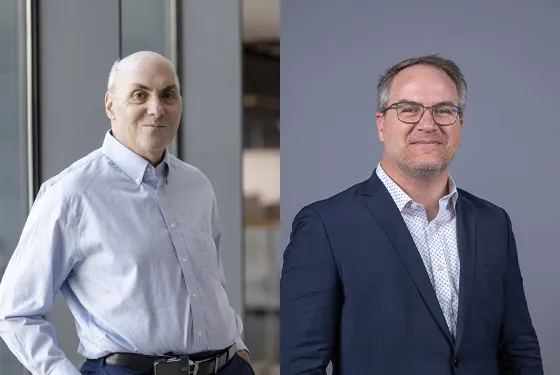
AFM-Telethon is launching a two-year strategic research programme with Professor Drew Weissman, recipient of the 2023 Nobel Prize in Physiology or Medicine for his groundbreaking work on messenger RNA, and Professor James Dowling, a leading expert in neuromuscular diseases, at the University of Pennsylvania. The aim is to develop lipid nanoparticles capable of targeting muscle tissue while minimising uptake by the liver.
Improving the safety and effectiveness of advanced therapies, particularly gene therapies, through precise tissue targeting is one of the key challenges facing advanced medicine today.
Addressing the limitations of AAV-based vectors
Among the approaches currently used in gene therapy, adeno-associated virus (AAV)-based vectors have demonstrated remarkable therapeutic potential. However, they still present several limitations. A significant proportion of the vector dose may be taken up by the liver before reaching muscle tissue, contributing to concerns associated with high-dose administration. In addition, immune responses remain a major challenge, both for patients with pre-existing immunity to AAVs and for the development of repeat-dosing strategies.
A two-year research programme targeting muscle tissue
To help advance innovative therapies and address the specific challenges associated with neuromuscular disorders, the project aims to develop a new generation of non-viral delivery systems based on lipid nanoparticles (LNPs), lipid-based particles capable of carrying and delivering genetic material into cells. Similar technologies have already been successfully used in several messenger RNA (mRNA) vaccines, including COVID-19 vaccines. These next-generation nanoparticles will be specifically engineered to target muscle fibres and muscle stem cells while reducing their accumulation in the liver.
Jean-François Briand, Director of Operations and Scientific Innovation at AFM-Téléthon, explains: “Recent advances have significantly expanded our understanding of lipid nanoparticles and their therapeutic potential. Our goal is now to harness these advances to develop gene therapies based on lipid nanoparticles that selectively target muscle fibres and muscle stem cells while limiting accumulation in other organs, particularly the liver. Compared with viral vectors, lipid nanoparticles can carry larger genetic payloads and may also facilitate repeat administration by avoiding some of the immune-related limitations associated with viral approaches. The collaboration we are launching with Professor Drew Weissman, recipient of the 2023 Nobel Prize in Physiology or Medicine for his pioneering work on mRNA, and Professor James Dowling, an internationally recognised expert in neuromuscular diseases, marks the beginning of an exciting new scientific journey.”
Designing and evaluating new lipid nanoparticle formulations
To achieve this goal, researchers will design and evaluate dozens of new lipid nanoparticle formulations using AI-enabled high-throughput screening approaches.
Drew Weissman, MD, PhD, Roberts Family Professor in Vaccine Research, Director of the Institute for RNA Innovation at the University of Pennsylvania, and Director of Vaccine Research, Infectious Diseases Division, adds: "We are constantly working to evolve mRNA and LNP technologies for further applications in disease and healthcare. Now, with AI, we can accelerate our work to match the right therapy with the right way to deliver it into the body and also have it be safe and effective. The potential to keep working on approaches that impact more people with rare diseases that until now, have not yet been possible, is what motivates us. This grant will help us get there, and we are so grateful to AFM-Telethon."
Once the most promising formulations have been identified, they will be assessed in cellular and preclinical models of Duchenne muscular dystrophy and dysferlinopathy, two neuromuscular disorders for which efficient and selective muscle targeting remains a critical challenge.
James Dowling, MD, PhD, Ruth Wagner Van Meter & J. Ray Van Meter Professor of Neurology, Director of the Penn Neurogenetics Therapy Center, and Professor of Genetics, comments: "We always think about the potential global impacts of our research, and this support from AFM-Telethon shows that scientific discovery has no borders. This project will focus first on the delivery technology for therapies with two neuromuscular diseases that affect many thousands of people worldwide but will be scalable to even more. Ideally, we will be able to create and deliver new therapies based on this technology, particularly gene editing which has not been available for neuromuscular disorders."