
ASGCT 2026: Atamyo Therapeutics presents encouraging ATA-200 results in LGMD-R5
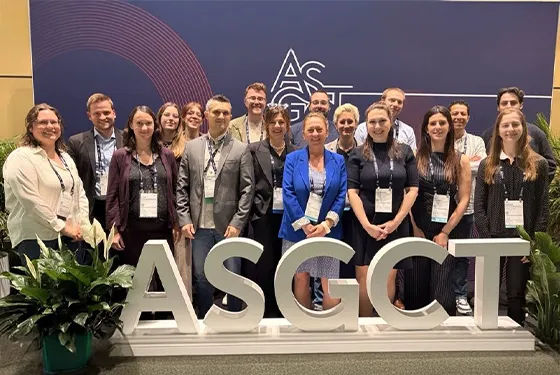
Atamyo Therapeutics presented the first safety, pharmacodynamics, and efficacy data from its ATA-200 gene therapy in LGMD-R5 at the ASGCT 2026 Annual Meeting. Results observed in the first treated patients showed high SGCG protein expression together with improvements in several biological and functional parameters
First results presented at ASGCT 2026
Atamyo Therapeutics presented the first safety, pharmacodynamics, and efficacy results from its Phase 1b/2 clinical trial evaluating ATA-200 gene therapy in LGMD-2C/R5 limb-girdle muscular dystrophy associated with γ-sarcoglycan deficiency (SGCG, gamma-sarcoglycanopathy) at the ASGCT (American Society of Gene and Cell Therapy) Annual Meeting 2026.
Four patients with LGMD-R5 have received ATA-200 as part of the ongoing clinical trial conducted at the Powell Gene Therapy Center at the University of Florida by Dr. Barry Byrne and supported by The Dion Foundation for Children with Rare Diseases.
A single intravenous gene therapy administration
LGMD-2C/R5 is a severe muscular dystrophy that appears in childhood and causes loss of walking ability before adulthood, respiratory and heart failure, and premature death.
The Phase 1b/2 clinical trial (NCT05973630) is a single-center study evaluating the safety, pharmacodynamics, efficacy, and immunogenicity of ATA-200 in children aged 6 to 13 years.
ATA-200 is an adeno-associated virus (AAV) gene therapy carrying a normal copy of the human SGCG gene and administered as a single intravenous injection at a dose of 1.0E+14 vg/kg.
This gene therapy product was developed by Isabelle Richard, a pioneer in the study of limb-girdle muscular dystrophies and the development of innovative therapies at Genethon.
High SGCG protein expression observed
At a dose of 1.0E+14 vg/kg, the following was observed in the first two patients treated with ATA-200:
- more than 90% of muscle fibers expressing the SGCG protein — demonstrating that almost all muscle fibers express the therapeutic gene (90.2% for patient 1 and 92.1% for patient 2, biopsies at 6 months);
- a significant and sustained reduction in CPK levels (a biomarker of muscle damage) and a decrease in transaminases 12 months after treatment, demonstrating the significant efficacy of ATA-200 gene therapy;
- clinical benefits observed on several other important parameters in ambulatory patients, particularly in timed functional tests.
No serious side effects observed
No serious side effects were observed in the four patients treated, confirming the safety of the product.
“These initial results are very encouraging and demonstrate the potential of our product with biological data rarely seen in neuromuscular diseases and at such an early stage of the trial. I would like to commend the quality of the work done by the teams at Atamyo Therapeutics and, in particular, the commitment and determination of Isabelle Richard, which has made it possible to offer this hope to patients and their families. We are deeply grateful for the support of the Dion Foundation and Cure SCG as well as our collaboration with Dr. Barry Byrne of the Powell Gene Therapy Center and proud to offer children with LGMD-R5 the opportunity to receive a treatment that could change their lives.” Angela Columbano, CEO, Atamyo Therapeutics.
Further results from this ongoing study are expected to be published in the coming months, when new longer-term follow-up data becomes available.