
Duchenne muscular dystrophy: two new tools to better study the disease
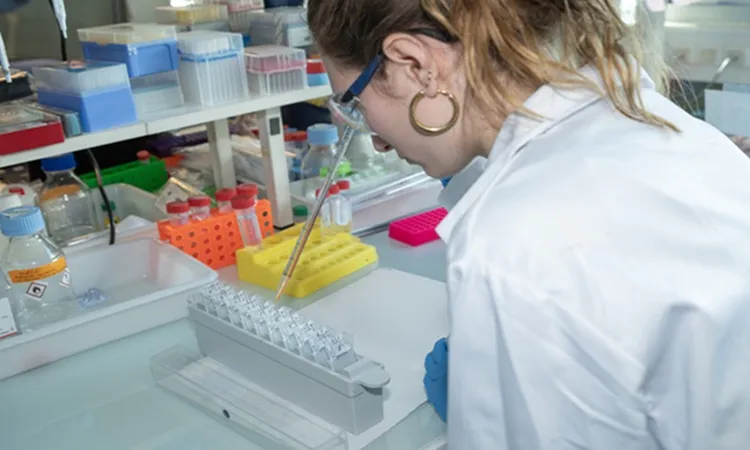
French researchers supported by AFM-Téléthon have developed two new models in Duchenne muscular dystrophy, opening new perspectives for research, both to better understand neurological involvement and to develop future treatments.
Two French research teams used CRISPR/Cas9 molecular scissors to develop two tools in Duchenne muscular dystrophy (DMD): human stem cells to explore brain involvement and a new animal model reproducing one of the most frequent disease-causing mutations.
Better understanding the impact on the brain
Although DMD is primarily known for its muscle involvement, around 30% of patients also develop brain abnormalities associated with cognitive or neurodevelopmental disorders that remain poorly understood.
Researchers at I-Stem, AFM-Téléthon’s cell therapy laboratory, used molecular scissors to remove several dystrophin isoforms specifically expressed in the brain from human stem cells.
Using these models, scientists will now be able to observe how the absence of these proteins disrupts brain development and better understand the neurological symptoms associated with the disease.
A new animal model
At the same time, French researchers at Généthon, AFM-Téléthon’s gene therapy laboratory, developed a rat model carrying one of the most frequent mutations found in patients: deletion of exon 45 of the DMD gene.
This rat develops the main features of the disease, including progressive muscle degeneration, cardiac involvement and cognitive disorders. Researchers also identified spontaneous exon skipping that mitigates disease severity.
This new model represents a valuable tool for understanding the different forms of the disease and opens perspectives for future therapeutic strategies targeting exon skipping.
Sources
Knock-out of specific DMD gene isoforms in the parental hESC line SA001 using CRISPR/Cas9.
Chatrousse L, Poullion T, Mahiou H et al.
Stem Cell Res. 2026 Feb.
A new dystrophin-deficient rat model mirroring exon skipping in patients with DMD exon 45 deletions.
Wang T, Daoud C, Dubois A et al.
Dis Model Mech. 2026 Jan.