Type II and III SMA: A Promising New Gene Therapy
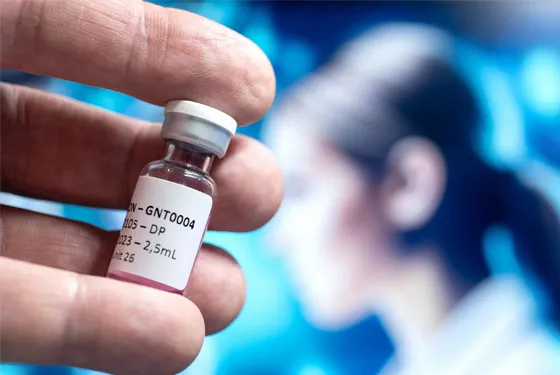
In spinal muscular atrophy linked to SMN1 (SMA), a single dose of a novel gene therapy called GC101 improved motor function in nine patients with type II and type III SMA aged six months to 18 years.
Find here all the latest news on AFM-Telethon and rare diseases.

In spinal muscular atrophy linked to SMN1 (SMA), a single dose of a novel gene therapy called GC101 improved motor function in nine patients with type II and type III SMA aged six months to 18 years.

In this Research Highlights issue, we present recent study findings on thymectomy and CAR-T cell therapy in myasthenia, as well as the evaluation of ChatGPT for supporting rehabilitation in adolescents with myositis.

Lines of research moving forward, lines of solidarity expanding, lines of resistance giving way to treatments. May this new year be driven by scientific and medical advances, stronger solidarity and new victories against disease. AFM-Téléthon wishes a happy 2026 to all those who refuse the impossible and are building a true revolution in medicine!

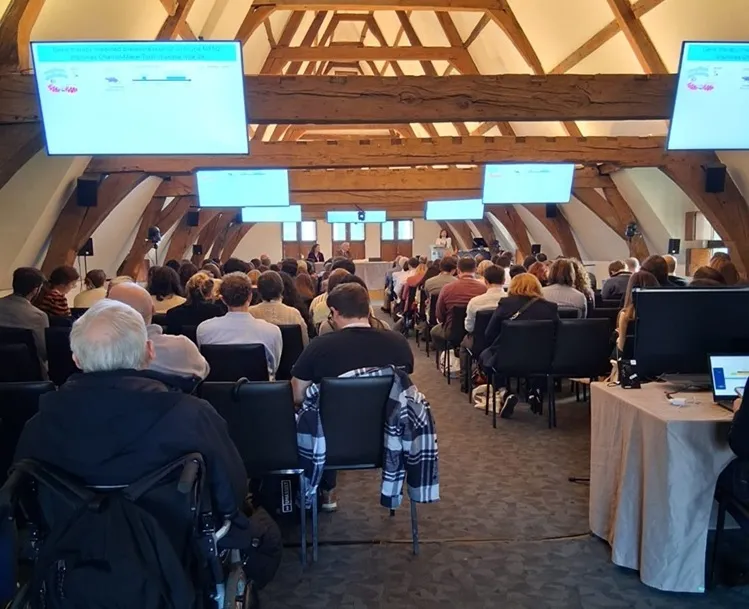
Antwerp put the spotlight on CMT by hosting the second European congress dedicated to Charcot-Marie-Tooth disease. The event strengthened cooperation across Europe among researchers, clinicians and patients. Discover the key highlights: promising treatments and diagnostic innovations.

The thirty hours of Téléthon 2025 come to an end with a total of 83,504,259 euros! A result worthy of Santa’s achievements, an exceptional patron thanks to her energy and her determination to “break the records”. This result embodies the trust and loyalty of donors standing alongside families, researchers and volunteers. Today, a new medicine driven by the Téléthon is changing and saving lives. This fight must continue, as 95% of rare diseases remain without treatments.
A patient with Crigler–Najjar syndrome, immunised against the AAV vector used in gene therapy, was able to receive treatment as part of a Genethon-led trial, thanks to the prior administration of imlifidase, an enzyme developed by Hansa Biopharma.

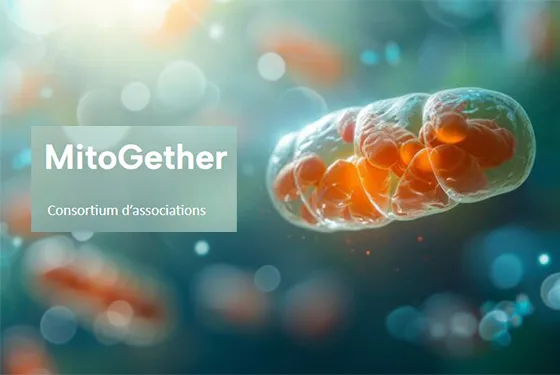
To celebrate World Mitochondrial Disease Week, the “MitoGether” consortium, uniting 12 patient and family associations, is launching Mitogether.com. This new portal aims to become the leading online resource for everyone affected by a genetic mitochondrial disease: patients, families, healthcare professionals, researchers, and pharmaceutical industry stakeholders.

A new milestone has been reached in the clinical trial of gene therapy conducted by the Généthon laboratory for Duchenne muscular dystrophy.

Discover Cure Through Innovation 2025, the reference brochure presenting at a glance the core missions, commitments, and achievements of AFM-Téléthon. An essential document to grasp the diversity of its actions and the emergence of an innovative medicine born from 65 years of fighting.

June 21 marks International Crigler-Najjar Syndrome Day. This rare genetic liver disease forces patients to live under intensive phototherapy. Thanks to a gene therapy developed by Généthon, the hope of a life without lamps is becoming a reality for some. But not all patients have access to it yet.

On June 20, for International Facioscapulohumeral Muscular Dystrophy (FSHD) Day, AFM-Téléthon reaffirms its commitment to individuals living with the disease and provides an update on recent research progress.

June 2 marks the European Myasthenia Gravis Day, an awareness initiative launched in 2023 by the European coalition ALL United for MG. This mobilisation brings together several patient organisations across Europe, including AFM-Téléthon. Its goals: to raise awareness of this rare disease, inform healthcare professionals, and actively support research efforts.

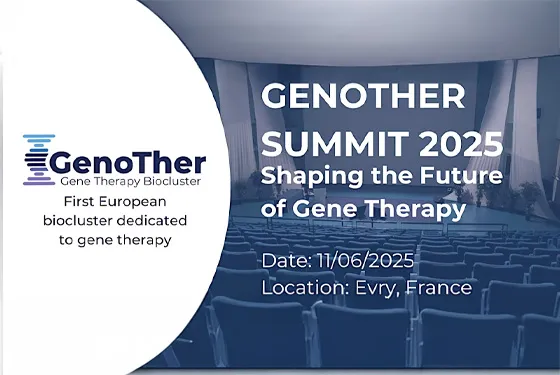
On June 11, 2025, Généthon, the AFM-Téléthon laboratory, is co-organizing the GenoTher Summit 2025 in Évry, a major international scientific event bringing together the gene therapy ecosystem with a shared ambition: sharpening the strategic trajectory and industrial readiness of innovative treatments for rare diseases and beyond.

Presented on May 17 at the 2025 Annual Meeting of the American Society of Gene & Cell Therapy (ASGCT), the results of Genethon’s trial for Duchenne Muscular Dystrophy show stabilization of motor functions and a significant, sustained reduction in CPK levels in patients treated at the effective dose. The pivotal phase is scheduled to begin mid-2025 in Europe and the United States.

The results of the European MIROCALS trial provide new insights into a promising therapeutic approach for Amyotrophic Lateral Sclerosis (ALS). Low-dose interleukin-2 could slow disease progression in certain patients. A study supported by AFM-Téléthon and its laboratory, Généthon, through its biobank.