Our actions to support patients
AFM-Telethon is battling on all fronts, from access to diagnosis and appropriate treatment to close support, giving priority to the search for innovative solutions and a response to the needs of patients.
Do a search on the AFM-Telethon website.

AFM-Telethon is battling on all fronts, from access to diagnosis and appropriate treatment to close support, giving priority to the search for innovative solutions and a response to the needs of patients.

Encouraging innovation, creating pathways between academic research and private research, supporting those involved in developing the drug: the AFM-Telethon is investing to speed up the arrival of innovative biotherapies.

Treatments and therapeutic innovation are born out of the knowledge of genes and the understanding of the mechanisms causing disease. Beyond its three pioneering laboratories combined within the Biotherapies Institute for rare diseases, AFM-Telethon has been developing collaborations for many years with scientists from all over the world.

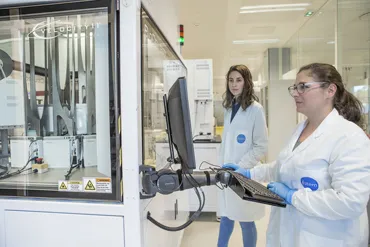
To accelerate the development of innovative treatments for rare diseases, the AFM-Telethon has created its own laboratories. Devoted to gene therapy of rare diseases (Genethon), to stem cells (I-Stem) and to myology (Institute of myology), they are now international leaders in their field. Located within the Institute for rare disease biotherapies, the Association’s three laboratories play a major role in the medical revolution.

Innovation in scientifical, medical, social and technological fields, AFM-Telethon is a pioneer in the research and support to improve patients’ lives. Three missions are at the heart of its action: Cure, Care, Communicate.

June 21 marks International Crigler-Najjar Syndrome Day. This rare genetic liver disease forces patients to live under intensive phototherapy. Thanks to a gene therapy developed by Généthon, the hope of a life without lamps is becoming a reality for some. But not all patients have access to it yet.

On June 20, for International Facioscapulohumeral Muscular Dystrophy (FSHD) Day, AFM-Téléthon reaffirms its commitment to individuals living with the disease and provides an update on recent research progress.

June 2 marks the European Myasthenia Gravis Day, an awareness initiative launched in 2023 by the European coalition ALL United for MG. This mobilisation brings together several patient organisations across Europe, including AFM-Téléthon. Its goals: to raise awareness of this rare disease, inform healthcare professionals, and actively support research efforts.

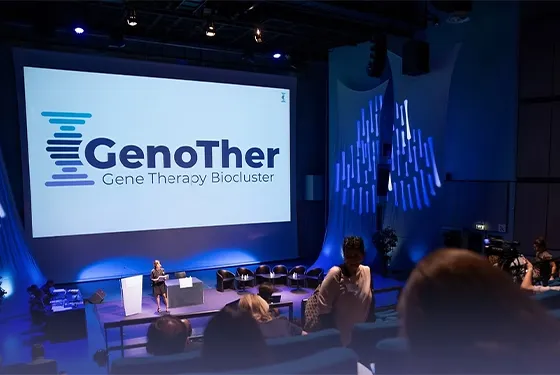
On June 11, 2025, Généthon, the AFM-Téléthon laboratory, is co-organizing the GenoTher Summit 2025 in Évry, a major international scientific event bringing together the gene therapy ecosystem with a shared ambition: sharpening the strategic trajectory and industrial readiness of innovative treatments for rare diseases and beyond.

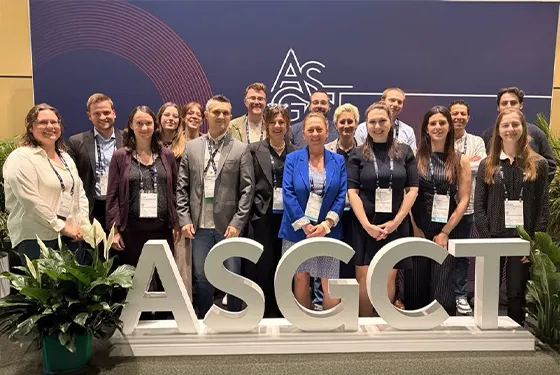
Presented on May 17 at the 2025 Annual Meeting of the American Society of Gene & Cell Therapy (ASGCT), the results of Genethon’s trial for Duchenne Muscular Dystrophy show stabilization of motor functions and a significant, sustained reduction in CPK levels in patients treated at the effective dose. The pivotal phase is scheduled to begin mid-2025 in Europe and the United States.

The results of the European MIROCALS trial provide new insights into a promising therapeutic approach for Amyotrophic Lateral Sclerosis (ALS). Low-dose interleukin-2 could slow disease progression in certain patients. A study supported by AFM-Téléthon and its laboratory, Généthon, through its biobank.

€ 96, 553, 593 : this is the final amount raised during the Telethon held on 29 and 30 November 2024. This result reflects an extraordinary outpouring of solidarity, driven by millions of donors, volunteers and partners who have stood by families in their fight for nearly 40 years. It is also the outcome of the outstanding commitment of our patron, Mika, and the many presenters and professionals from France Télévisions, who powerfully amplified the voices of families and researchers united in their determination to defeat the disease.

A joint study conducted by I-Stem, Genethon and the Institute of Myology reveals the positive effects of two drugs—saracatinib and bazedoxifene—on muscle cell models of dysferlin-related limb-girdle muscular dystrophy type R2. This opens up a novel research avenue.

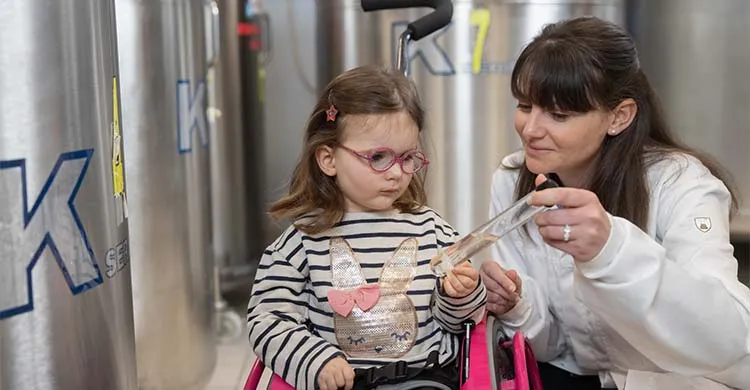
Thanks to the financial support of the AFM-Téléthon, a decisive step has just been taken in the fight against sickle cell disease. In collaboration with AP-HP, Institut Imagine and SK pharmteco, the AFM- Telethon will enable the production of lentiviral vectors for the development of a gene therapy clinical trial. This represents hope for the 5 million patients worldwide affected by this incurable blood disease.

The impossible becomes possible! Thanks to the momentum of the Telethon and the work of researchers, a true scientific and medical revolution has begun and the first victories against rare diseases - previously incurable - have been won.